
Monitoring Seawater Intrusion in a Coast Aquifer
Grapher Template by Golden Software
103
176
Monitoring Seawater Intrusion in a Coast Aquifer
(Template by Golden Software).grt
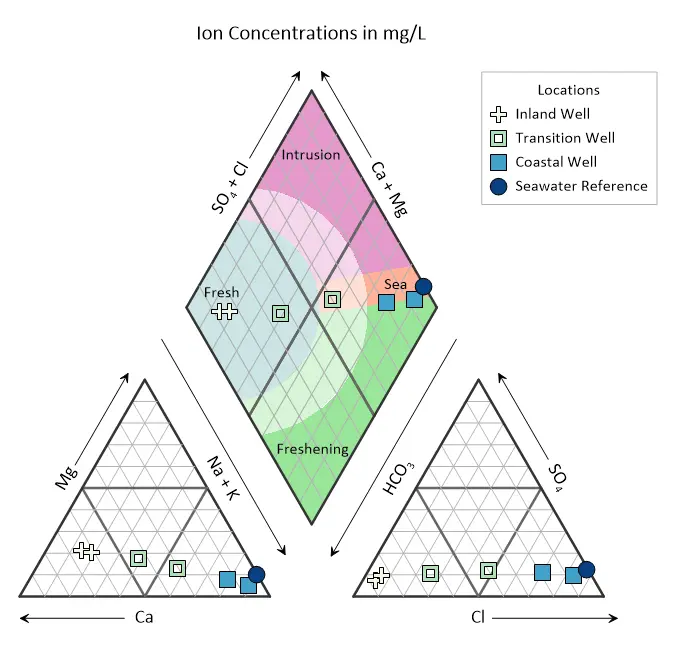
This Piper diagram simplifies the visualization of complex groundwater chemistry by combining two ternary diagrams with a central diamond plot. It shows the relative proportions of major cations and anions to reveal distinct water types, normalizing concentrations into percentages for accurate comparison regardless of total salinity.
Designed for tracking coastal seawater intrusion, this diagram highlights the chemical shift from fresh, calcium-bicarbonate water to saline, sodium-chloride water. Color-coded background zones (Fresh, Intrusion, Sea, and Freshening) provide immediate context to quickly diagnose aquifer health and pinpoint contamination pathways.
This analysis is commonly used by water utilities, environmental consultants, and hydrogeologists to assess aquifer sustainability, monitor drinking water quality, and support groundwater management decisions in coastal regions.
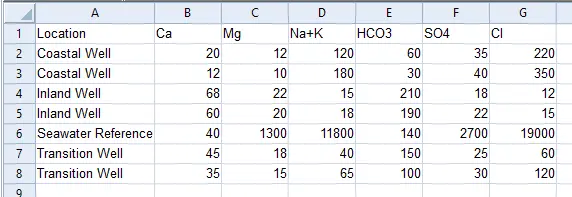
The data for this template can be found below to download and customize:
In addition, to match the classes shown in the display here exactly, you can apply a Grapher class file (GCL). To apply it, do the following:
- Select the class plot (such as Anion or Cation in this example)
- In the Property Manager, on the Plot tab, click Classes | Edit…
- In the Edit Classes dialog, click Load…
- Select the GCL file available from this ZIP: Well-Classes.zip
- Click OK
Industry Focus: Water Resources, Environmental Science, Hydrogeology, Groundwater Management, Agriculture, Mining, Public Policy
Graph Features: Piper
Instructions
To use this template in Grapher:
- For the best experience, structure your data in the same format shown on this page or use the example files if provided above.
- Click Download Template at the top of this page to download a GRT template file.
- In Grapher, click File | Open and open the file.
- Click Template | Populate Template to load your own data into the template.
Primary Categories: Categorical, Spatial
Industry Focuses: Agriculture, Environmental Science, Groundwater Management, Hydrogeology, Mining, Public Policy, Water Resources
Type: Piper